
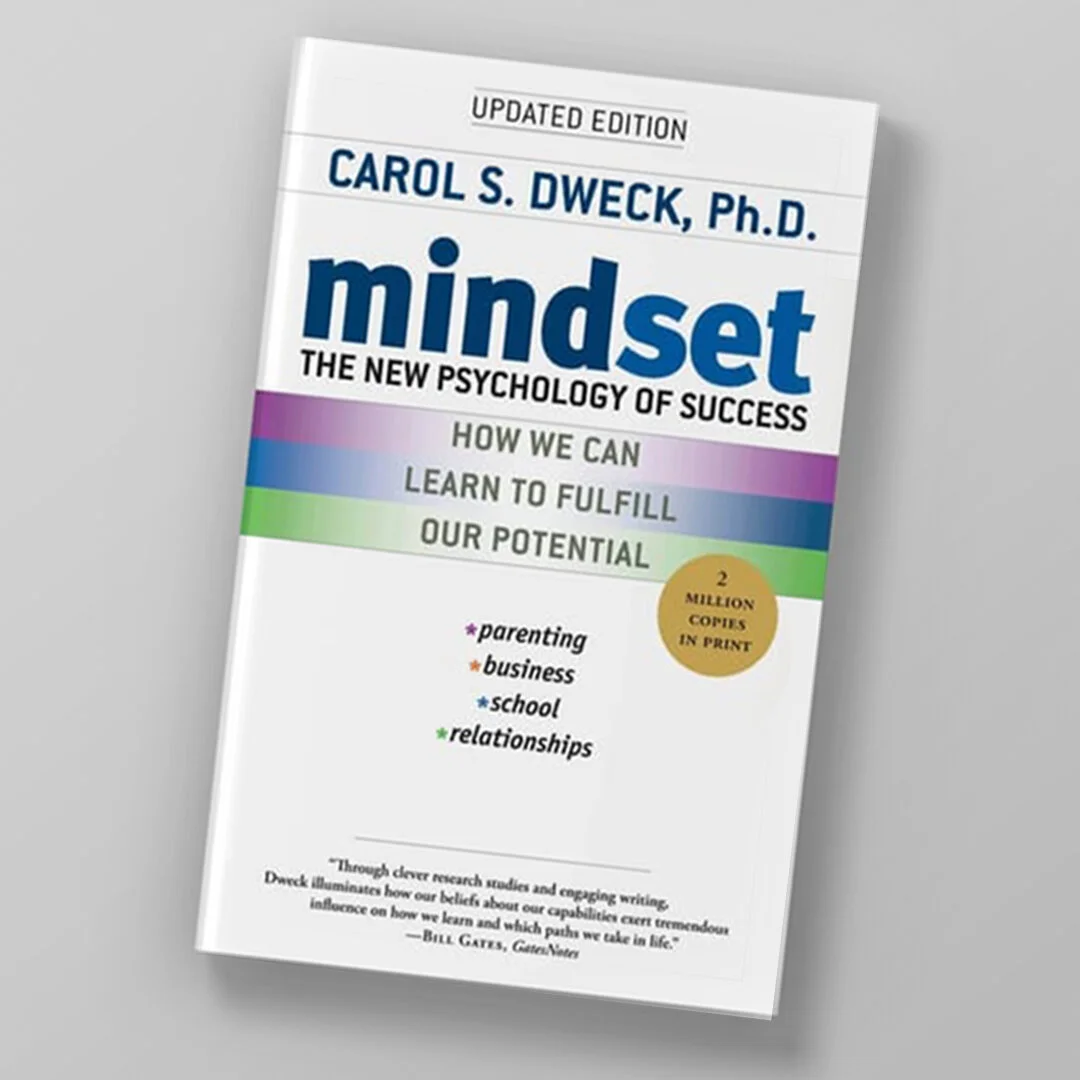
Mindset by Carol Dweck is about exactly what it sounds like: the power of one’s thinking, how it impacts our lives, and how you can change yours. And as the “Ph.D” on the cover implies, Dweck has researched the hell out of the subject and put it all in book form. Sort of.
TLDR:
Corey’s Score: 3 Stars
Who Should Read It: psychology nerds, psychology and mental health professionals, those in need of mental/cognitive paradigm shifts
Skip It If: you want an academic read
Do Or Do Not… But What About Try?
The fork in the road we all face is the choice of fixed or growth mindset.
A fixed mindset says my abilities do not change. You’re smart or dumb. Fast or slow.
Turns out, this doesn’t play out well on an emotional level. It’s like a domino effect; believe in a fixed way of things (in any given area of life), and inevitably you end up insecure, hesitant, domineering, or any number of flawed approaches. Ultimately, fixed mindset diminishes success outcomes of all forms.
Growth mindset, on the other hand, respects that while we all have different starting points, anyone can improve with effort. Dweck’s research not only tends to suggest that growth can happen, but indeed that it happens when we believe it can and act accordingly. It’s not just positivity psychology; there’s a natural process that occurs that lends to perpetual improvement and, well, growth.
Less Isn’t More
Dweck builds on this foundation and attempts to put flesh on the bones, so to speak. She considers the principles in different arenas: business, relationships, romance, etc.
To some degree, she succeeds.
For example, she highlights the egotism of several high profile leaders and notes how their fixed mindset was the downfall of their companies or careers. She draws out the connection between fixed mindset and the need to protect one’s identity – after all, I’m either smart or I’m dumb, and if you find out that I’m dumb or I admit it, it’s game over. This can make you anxious, angry, insecure, leave you in denial, and any other slew of unhealthy, inflexible states of mind.
I liked a lot of the stories, and how they illustrated her points. Still, I wanted more than anecdotes; give me more of the data, the research, that would solidify the point. In theory, I completely agree that the principle applies across the board, but Dweck seems to spend most of the book extrapolating her research, rather than giving the reader concrete principles and solid data. This weakens it, in my opinion, especially when I’ve heard basically the same illustration with different names and contexts ten times over.
Moreover, in her stories and discussion, I felt Dweck failed to delineate exactly how growth and fixed mindsets transform those who hold them.
Why does a growth mindset lend to humility? What is happening in the brain or nervous system? Tell me more about fixed mindset and how it cultivates insecurity, pride and shame.
Dweck only starts thinking about these connections, and so the book lacks the finishing touches that would have made it a true great.
That said, to her credit, through examples and some exposition, Dweck provides a great foundation for understanding growth vs. fixed mindset. Psychology nerds will be able to spring board off of her research and examples, and a therapist like myself can use the principles to inform and strengthen treatments like Cognitive-Behavioural Therapy and more.
In summary, there are some cool tidbits throughout Mindset, and the main thesis hits hard. But like a lot of psychological self-help books based around a simple (albeit powerful) idea, it proves difficult for Dweck not to repeat herself, and so the book ends up far longer than it needs to be. I’ve felt the same way about Brene Brown’s work – while it’s great stuff in theory, even life changing if understood and applied, it didn’t need to be a whole book.
Again, I think this could have been a sub-60 minute TED talk or even a blog series. Still, I don’t regret the read, and as someone in the psychology world, Dweck’s gives me some powerful tools and concepts to dwell on. The connections I want, I’ll work to make through time and effort.
How’s that for growth mindset? ;)



Leave A Comment