

What is trauma, and how can we heal from it? The following is a basic guide to a holistic approach to trauma: how to facilitate healing from all angles, i.e. body, mind, heart (emotional/social domains), and even spirit.
Like most mental health and therapy lingo, the word “trauma” gets thrown around a lot.
I first heard it about 10 years ago when I was seeing a therapist for major anxiety and depression.
She suspected that, over time, I’d been wounded by romance enough that it left me easily triggered by even the prospect of a new relationship.
That’s what I want to tackle here: the idea of trauma, what happens in the body, and what we can do about it, from a holistic approach.
The quick and obvious disclaimer: this post isn’t replacement for mental health treatment by a professional. If you need help, go get it! Look for a therapist who you fit well with, and who is trauma-informed at the very least.
What is Trauma?
It’s difficult to define psychological trauma in a simple sentence or two, mostly because diagnosis looks at both an event that happens to someone as well as their symptoms. Quickly, let’s look at the DSMV’s take on both:
Traumatic events:
- direct or indirect exposure to a fatal or near-fatal event, sexual violence, or potentially the threatening of any of these (it’s unclear if “threat” involves another human or simply being close to apparent death)
- learning that such events above happened to someone close
- ongoing, repeated exposure to the aftermath of fatal events at work (e.g. paramedics finding human remains)
Trauma symptoms (e.g. PTSD):
- recurrent and intrusive memories or dreams that trigger significant stress
- dissociative reactions (e.g. the sense that the events are happening again)
- intense and prolonged psychological or physiological stress at exposure to cues that symbolize the events (e.g. triggers)
- avoidance of said triggers
- negative alterations in mood or cognition
It’s important to note that not everyone who experiences traumatic events experiences the same (or any) post-trauma symptoms. In fact, the vast majority (~90-95%) of folks who go through a by-definition traumatic event return to normal not long afterwards. They resolve the trauma in their minds and have otherwise healthy circumstances that allow for proper healing.
A good rule of thumb is that if things linger past 12-18 months, or if functioning is inhibited significantly at work or in relationships, seek some help. When in doubt, talk to your doctor.
How Strict is This Definition?
You’ve heard people use trauma to describe their breakups, traffic scares, or other difficult experiences, but this definition is pretty clear: a traumatic event needs to be extreme, and the aftermath is pretty extreme too.
And yet, when we read the aforementioned symptoms, many of us have been there despite never experiencing something near-death.
So is there room for a “softer” definition of trauma?
Well, yes and no.
The therapist I saw years ago brought the word up not to diagnose but to help me understand what may have been happening after my repeated romantic difficulties. She called it “lower-case-T trauma”. I’ve always liked this phraseology, and all the more so now that I do trauma work with clients as a therapist.
What happened to me, after repeated breakups and several instances of betrayal, was not unlike true trauma: the pain of the events and their dire impact of heartbreak left me triggered by romance or other emotional connection, and intensely fearful of the same thing happening again.
For whatever reason, my nervous system didn’t get to heal properly. I didn’t get to the point of being able to tell myself (and believe) that the next person could be more trustworthy, could be into me, etc. Instead, my underlying and automatic thoughts around relationships and women were immensely stressful, and led to hyper vigilance and fear at the slightest hint that I could lose them or they could betray me.
Needless to say, this set me up for failure and stressed me out like crazy. Probably wasn’t fun for the girls I dated, too.
All that leads me to say that I don’t mind using a softer definition of trauma like the aforementioned “lowercase-T” trauma, so long as it’s made clear that this isn’t the clinical definition. In fact, I help people with this kind of trauma so often that it’s a shame there isn’t a better word that hits the nail on the head.
So what do we do about it?
Whether you’ve been exposed to a near death experience or simply haven’t been able to recover from negative life experiences and how they’ve shaped you, the general process to heal is the same. They key lies in nervous system regulation.
Nervous System: There is no “Chill Pill”
Ever been told to “take a chill pill” when you get worked up or upset? Ironically, this approach usually has the opposite of the desired effect. It only makes the person feel unheard and invalidated.
The reality is, only a wholistic approach to your nervous system — i.e. one that respects it as a biological, psychological, social or even spiritual entity — can truly move it towards a more relaxed and resilient state of being and thereby heal from traumatic impact.
If your thought patterns always twist towards the negative, you will be dysregulated.
If you’re unsettled on a subconscious level, shaken by unresolved memories and now hypervigilant, you’ll be dysregulated (biological).
If you have no meaning, no sense of purpose, no higher order that grounds and structures your life, you’ll end up dysregulated (spiritual).
If you’re alone, friendless, or without a close partner, you’ll be dysregulated (social). Likewise, if those around you invalidate or don’t understand or respect and love you, you’ll still be dysregulated, since you’re more or less alone on an emotional level.
All of these areas need to be dealt with to ground the nervous system and teach it a sense of safety and security.
Keep in mind here that we’re talking about any kind of trauma, including lowercase-T trauma. The strategies are more or less the same, but may require more work (in length or intensity) if the traumatic impact was more significant.
MIND: The Cognitive or Psychological Domain
After a life or death kind of event, or repeated betrayals or patterns that cause us to fear for our well-being or success, extreme thinking starts to leak from the nervous system’s subconscious to the semi-conscious. I’ll jump straight to an example:
After a few abruptly-ending high school relationships that went unprocessed (and just hurt like hell), I’d developed a strong fear of abandonment in romance. I probably wouldn’t have been able to articulate them without the right prompting (they were semi-conscious still), but they were there. And they made romantic possibilities near impossible. If I didn’t avoid women altogether, I felt I had to work desperately to make sure they were appeased if I had any hope of courting them.
That’s a developed cognitive distortion. Trauma led to underlying beliefs which led to automatic distorted thinking and unhelpful behaviour. Under the surface, my nervous system was chronically stressed, or at least easily triggered.
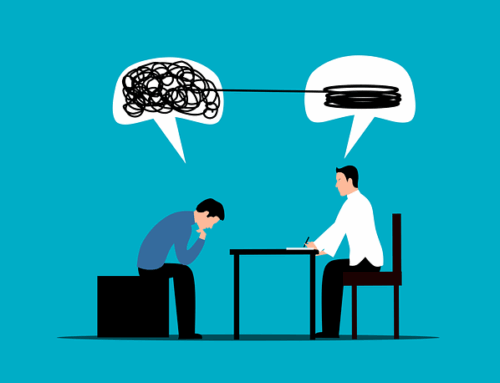
That’s where therapy came in: someone who was trained to see these patterns helped me see them and change them. Over time, I got better at noticing when I’d fall into these patterns and self-coach towards a healthier, more accurate perspective.
In this case, thoughts came from the inside out: my nervous system responded appropriately to threat and danger (abandonment), but the rest of me wasn’t mature enough (or helped enough, perhaps) to properly resolve what was happening inside me. Therefore, unhealthy patterns persisted.
Thankfully, if we make ourselves aware of our unhelpful thought patterns and slowly make changes, we can heal on a deeper biological level. That said, merely changing thought patterns can be difficult (and less potent) without change in the other domains to reinforce and bolster a sense of safety and security.
QUICK ACTION: Work on noticing and awareness of thought patterns, and having a mantra to redirect in a healthier direction.
BODY: The Biological or Physical Domain
We don’t have to start with thinking, though — we can in fact treat our nervous systems directly.
One way we do this is through relaxation skills, often called grounding techniques. These include breathing exercises or other Mindfulness-Based Stress Reduction (MBSR) strategies.
Trauma (even our lower-case-T version) causes the nervous system to become over-aroused, hence symptoms like irritability, panic attacks, etc. If we can intervene with body-based relaxation in this arousal, we can train the body to remain calm even when stressors are present. Essentially, the nervous system learns that “we’re safe” in spite of the trigger. Somatic techniques are a good start, and they have an increasing body of scientific support.
I usually recommend two main uses: spot treatment and routine treatment.
Spot treatment means grounding oneself in relative proximity to a stressor. That could mean intrusive thoughts, or when actually recalling traumatic events (which is why we always teach clients to use grounding techniques *before* we begin recalling trauma, so that they know how to regulate if recalling the events results in any kind of significant re-triggering). It could also mean that you expose yourself to a trigger while grounding, or using a technique in proximity to a stressor.
Routine treatment involves regular grounding work to buffer the body against stress, learn the skills of relaxation (so you can use it when a trigger shows up), and teach the body a more persistent sense of safety. When our nervous systems maintain relative peace over longer periods of time, we essentially learn that, in fact, we are “safe” and do not need to be on high-alert all of the time (unresolved trauma teaches the opposite).
QUICK ACTION: Find a grounding technique or meditation that you like, and try doing it for a few minutes each evening as you begin your wind-down.
HEART: The Emotional Domain (/Social)
Humans are incredibly social creatures. So much so that loneliness is the major cause of mental health issues. Find someone who’s fighting depression, anxiety, suicidality, or even anger, and I am willing to bet you will find social isolation.
This domain is still being clarified, and really you could split the emotional and the social if you wanted. We could argue that the “emotional” side of life is dealing with feelings. But I tend to find we deal with feelings through thought-life (i.e. we cognitively process emotions to manage them). But something different happens when others experience and relate to us emotionally and vice versa: we co-regulate. Either way, a holistic approach accepts and even values overlap between the domains.
Being heard and understood, respected and connected, these are perhaps the most grounding experiences of all. Its ideal if we are accepted, mostly, by at least a few people, and if not fully accepted then tolerated enough that we can work on ourselves and work towards closer connection and trust. Either way, having people who are *our* people and who are relatively safe and predictable, and who we know would have our back, is one of the most powerful ways to manage trauma and calm the nervous system both short and long term.
Of course, there can be too much of a good thing. It’s possible to become co-dependent (as opposed to co-regulated), where one person isn’t a helper and support so much as a crutch. But that’s its own post, and the key takeaway here is that if you don’t have friends, a partner, or a community of some kind, you most definitely need to find one (whether you have been traumatized or not).
QUICK ACTION: Commit to some kind of regular social activity or gathering, even if it’s just a check-in phone call with a friend.
SOUL: The Spiritual Domain
“Those who have a ‘why’ to live, can bear with almost any ‘how’.”
― Viktor E. Frankl, Man’s Search for Meaning
Despite the secularization of the world, research continues to find benefits to religious life.
The devoted seem to live longer and more grounded lives. Prayer works like a grounding exercise, bringing calm and legitimate nervous system relaxation. Regular touch points with like minded and spiritually connected people creates community that secular folk don’t have as naturally.
The spiritual involves the following: one’s worldview, a sense of purpose, life rhythms that deepen meaning and connection to others, and even an anchoring set of values and principles that you try to live by.
All of these things aren’t “options” in someone’s life, at least not from a psychological health perspective. You might be able to go some time without truly considering them, but long term the consequences will find you out. More specifically, the lack of grounding and meaning will lead to chaos and instability, moral wavering and injury, lack of direction, anxiety, depression, and the like.
I’m not saying the spiritual needs always be explicitly spoken or even expressed in the typical religious ways, but as some have said, “You have to believe in something.” You can’t get away with avoiding all life’s harder questions forever.
QUICK ACTION: Think about the things that mean the most to you, or that provide you with a sense of purpose. Write down your highest values, and find time to do activities that line up with those values. Or, find ways to be more generous with your money or time.
There’s no one size fits all to healing from trauma — lower case T or upper case T — but a holistic approach to health and life can both heal and prevent short and long term impact.
Would love to hear your story or answer your questions if you have any, so feel free to find me on socials and share!



Leave A Comment